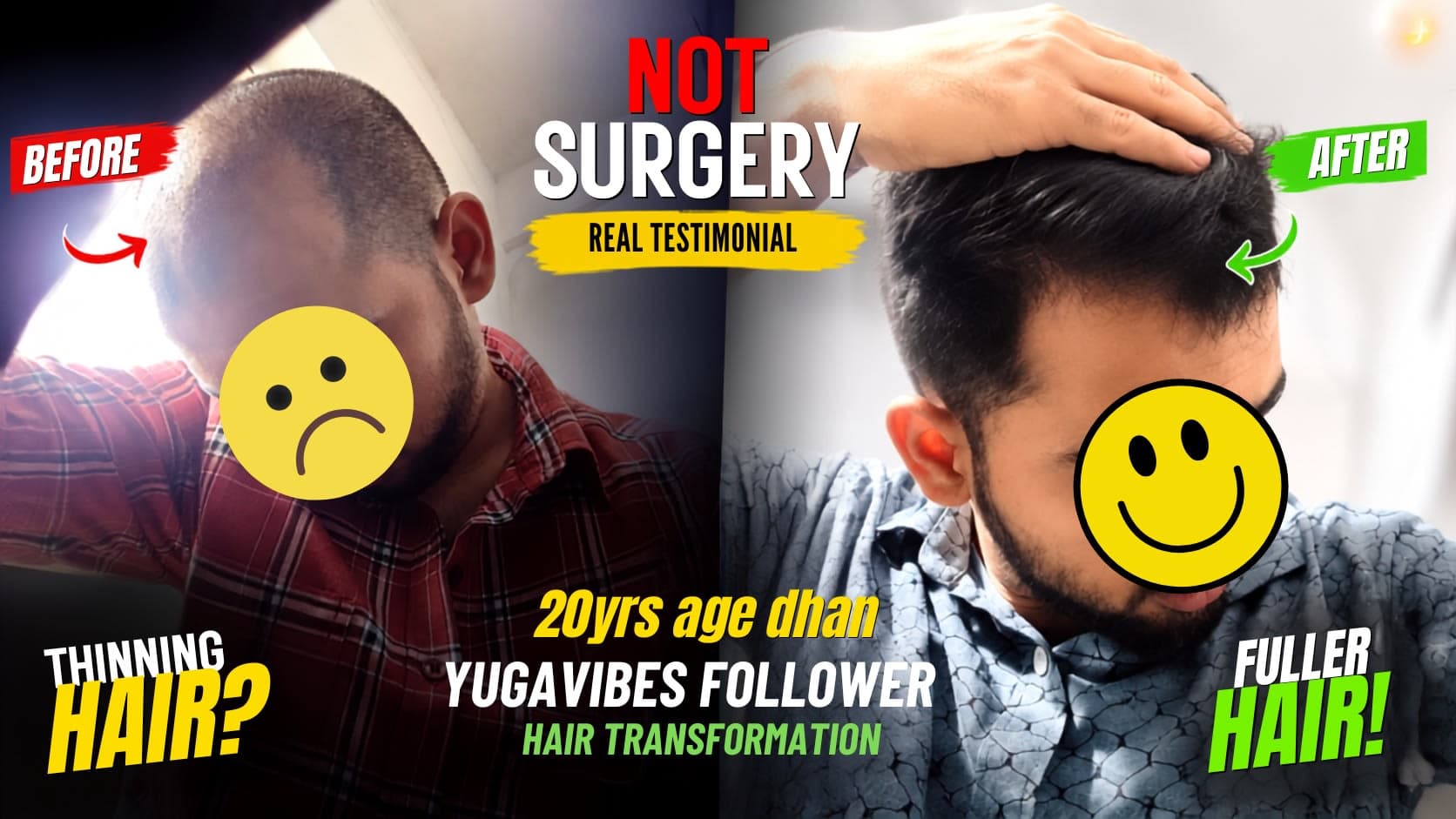
I still remember the exact photo that started all of this.
Someone took a picture of me from behind at a family function, and when I saw it, my stomach dropped. The thinning I had been ignoring in the mirror was impossible to ignore from that angle. I was in my early twenties. I thought hair fall was something that happened to other people, later, much later.
That photo kicked off four years of guessing. And I mean guessing — because that's what most of us are doing, even when we think we're "researching."
The four years I wasted (so you don't have to)
Here's roughly how it went. (I've kept this general — the pattern is what matters, and I'll share the full detailed timeline in a future post.)
Year one, I threw money at it. Every shampoo that promised "hair fall control." Every oil a relative swore by. Every serum with a before-and-after photo in the ad. Some of it smelled nice. None of it changed what I saw on my pillow every morning.
Year two, I followed the internet. One video said onion juice. Another said rice water. Another said never wash your hair more than once a week. Half the advice contradicted the other half, and nobody ever showed their sources. I tried most of it anyway.
Year three, I gave up for a while. Honestly. I convinced myself it was just genetics and there was nothing to do. That was its own kind of relief, but it wasn't true either.
Year four is when things changed — not because I found a miracle, but because I changed the question. I stopped asking "what product fixes hair fall?" and started asking "what does hair actually need to grow?"
That question changed everything, because the answer mostly isn't in a bottle. It's on your plate, in your blood reports, in your sleep, and in a few boring habits done consistently for months.
What I learned when I finally looked at the research
I have a diploma in nutrition, so once I started digging into actual studies instead of ads, things clicked fast. Three things stood out:
1. Deficiencies are a real, measurable cause of hair fall. Multiple studies have found that people with diffuse hair loss frequently have low ferritin (your iron storage) and low vitamin D — and researchers recommend checking these levels before starting any treatment. Nobody selling me shampoo ever mentioned a blood test.
2. Food is not a side character. Protein, iron, zinc, omega-3s — hair is one of the fastest-growing tissues in your body, and it's also one of the first things your body neglects when nutrition is poor. Your body considers hair optional. Your diet has to convince it otherwise.
3. There is no 7-day fix, and anyone promising one is lying to you. Hair grows about a centimetre a month. Even in proper clinical trials, results are measured at 3 to 6 months. That's why my cover photo compares week 1 to week 12 — twelve weeks is roughly the minimum honest timeframe, not the maximum.
And one more thing I learned the hard way: a nutritionist is not a dermatologist. Some hair loss is hormonal, autoimmune, or needs medical treatment. Part of my own progress came from finally seeing a dermatologist and following their advice properly, alongside fixing my food. I'll never pretend nutrition replaces that — on this site, food and medicine are teammates, not competitors.
What my mornings look like now
I'll break my full routine down in its own post, but the short version: my day starts with a fresh amla shot (yes, it's sour; yes, you get used to it), a handful of mixed seeds soaked overnight, and an actual breakfast with real protein in it. My hair care itself became simpler, not more complicated — gentle handling, a mild shampoo, no harsh treatments, and patience.
Nothing about that is sexy. Nothing about it is expensive. That's exactly the point.
So what is Yugavibes?
This site is the resource I couldn't find during those four years. Here's my promise about what you'll get here, every single week:
Studies, translated. I'll take real published research on hair and nutrition and break it down in plain language — what the study actually found, how strong the evidence is, and what it means for you practically.
Fact-checks of viral hair trends. When something blows up on social media, I'll dig into whether there's any science behind it before you waste six months on it like I did.
Food for hair. Practical posts on seeds, amla, protein, iron-rich meals — what to eat, simple ways to actually make it happen daily, built around Indian kitchens.
My real routine and real testimonies. What I personally do to maintain my hair, with honest timelines and honest photos. And stories from real people in this community — the basics, the struggles, the results.
Conversations with dermatologists. I'm starting a podcast where I sit down with dermatologists and ask them the questions we all type into Google at 2 AM. Because you deserve answers from people qualified to give them.
A 120-day plan. For those who want structure, I'm building a full 120-day food-first plan — and personal guidance for people who want me to walk through it with them.
What you will never get here
No product promotions dressed up as advice. No affiliate links hiding behind "recommendations." No miracle claims. No 7-day results. If I ever mention a product, it's because I actually use it and I'll say so plainly — and I'd rather teach you why something works so you can choose anything that fits your budget.
And a boundary I'll repeat often: I'm a nutrition professional, not a doctor. Nothing here is medical advice or a treatment plan. If your hair fall is sudden, patchy, or severe, please see a dermatologist first — then come back here and let's get your plate sorted alongside whatever they advise.
Come guess less with me
If any part of my story sounded like yours — the pillow check, the screenshot folder of remedies, the quiet panic at family photos — you're exactly who I'm writing for.
New post every week. Bring your questions, bring your doubts, and if something I say ever doesn't match the evidence, call me out. That's how we build something trustworthy.
Four years of guessing was enough. Let's do the next 120 days properly.— Yuga